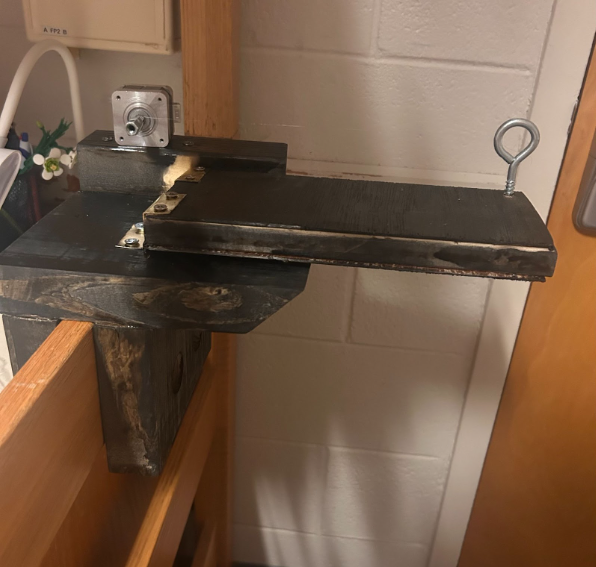
QuikStep — Automated Loft-Bed Step System

Mission
Dorm loft beds are notoriously difficult and unsafe to climb, especially when descending at night. Additionally, they pose a challenge to those with mobility impairments or injuries. QuikStep is a modular add-on system that slots onto any dormitory ladder rung and deploys a stable extended step at the push of a button.
The system contains multiple linked QuikStep units that deploy and retract in sequence. Control box houses electronics and the control button, located in a place assessible from both the top and the bottom of the bed to provide instant, comfortable, safe bed access in both directions.
The QuikStep was designed for my Engineering Design and Econ class (ME 3024) at Virginia Tech. As a team of four, we designed this product using a process curtailed to imitate industry. We used techniques like FMEA, DFM, DFA, gathered stakeholder data, and proposed economic strategy to develop the QuikStep through consecutive design phases.
Design Overview
Each module consists of a wooden body, a hinge-mounted retractable stepping surface, and a motorized actuation system. The design prioritizes:
- Safe and reliable deployment
- Ease of installation (no tools required)
- Low-cost manufacturability
- Modularity for different bed heights and ladder geometries
System Concept
Each QuikStep module mounts around an existing ladder rung. When activated, a DC motor rotates the extended step downward, creating a full surface for the user. When retracted, the step folds flat against the ladder to maintain floor clearance.
Key Features
- Two-button control: top-of-bed + bottom-of-bed controllers
- Modular mechanical design: units slot on without permanent installation
- Failsafe retraction: spring-assist and motor override
- Scalable: supports 2–6 step modules depending on loft height
Engineering Analysis
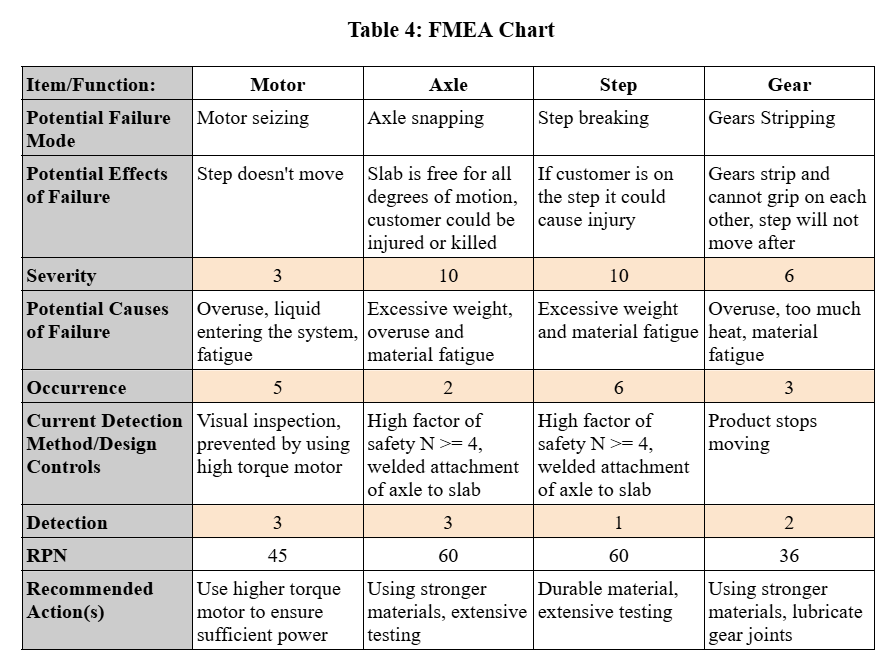
FMEA
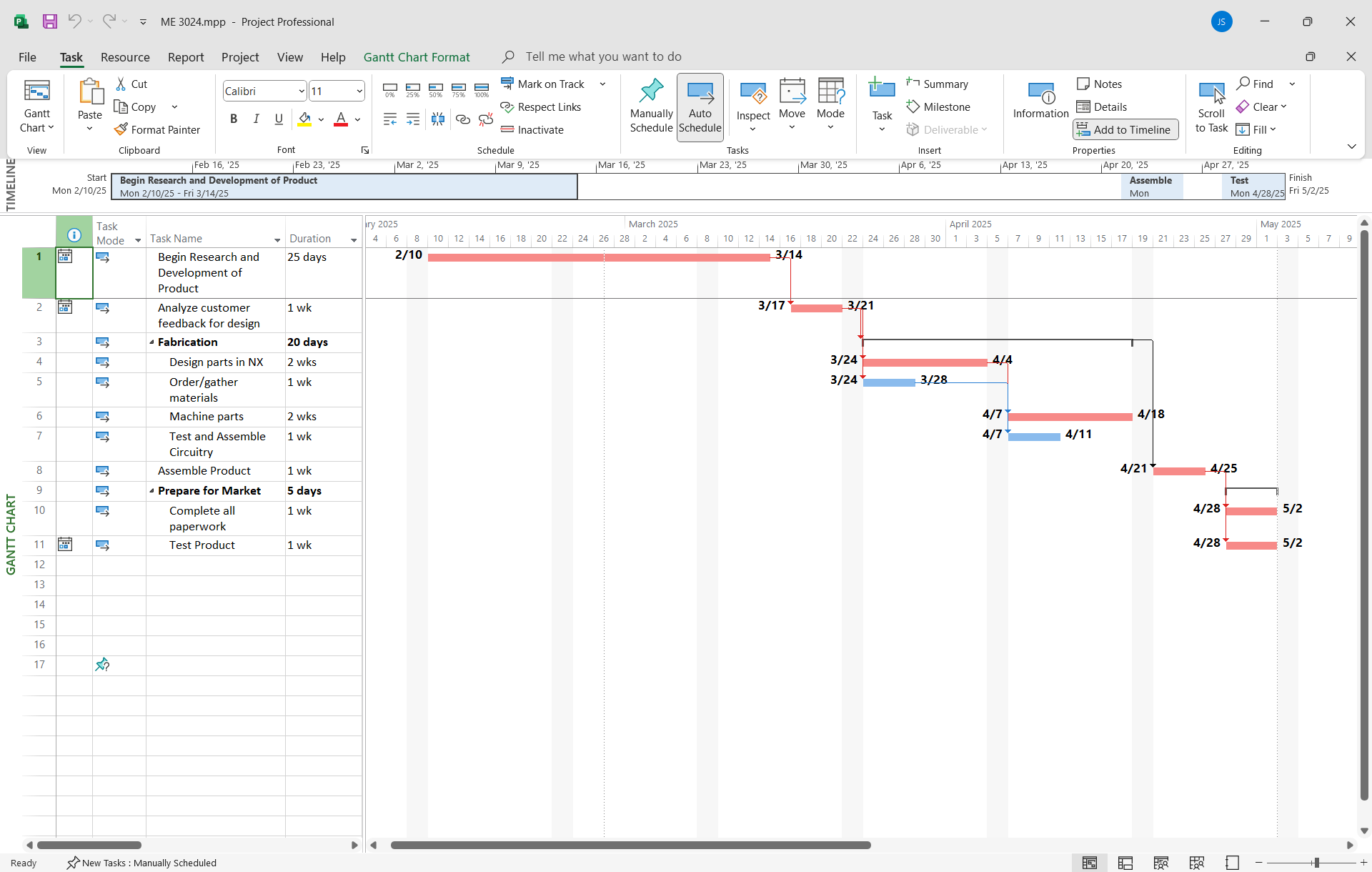
Gantt Chart — Project Timeline
Manufacturing
- Wood fabrication with Miter saw, Gorilla Glue to produce components.
- Arrayed step plywood to withstand 250+ pounds applied at end while weighing less than 8 pounds.
- Control box was a premade wooden box housing power electronics, Arduino controller, button toggle.
Electrical & Control System
- Microcontroller-based motor control with limit-switch feedback
- Top and bottom “deploy/retract” pushbutton panels
- Wiring harness designed for easy installation and modularity
- Integrated 12V motor power with onboard regulation for control electronics
Performance & Outcome
The QuikStep prototype demonstrated reliable deployment, adequate load support, and excellent user feedback during dorm testing.
The system met course requirements for design documentation, testing, and manufacturing quality. We faced setbacks, such as having materials previously available to us (metal) being restricted for senior design projects only. The QuikStep module that we built fit our vision: low-cost and easy to manufacture, but secure and stable. Although there was room for improvement (motor housing), the QuikStep provided support for 250+ lbs and withstood significant blows from a battle axe during testing.